Planetary Boundaries and Agriculture: Climate Change
Opinion
When the price of eggs more than doubled in 2025, or when wheat prices spiked by over 50% in the weeks following Russia's invasion of Ukraine, these events were largely treated as one-off shocks to be weathered. But the pattern suggests otherwise. Food price shocks are in fact becoming more frequent and severe, and our food system is structurally exposed to the forces driving them: geopolitical instability, trade disruption, disease outbreaks, and climate change.
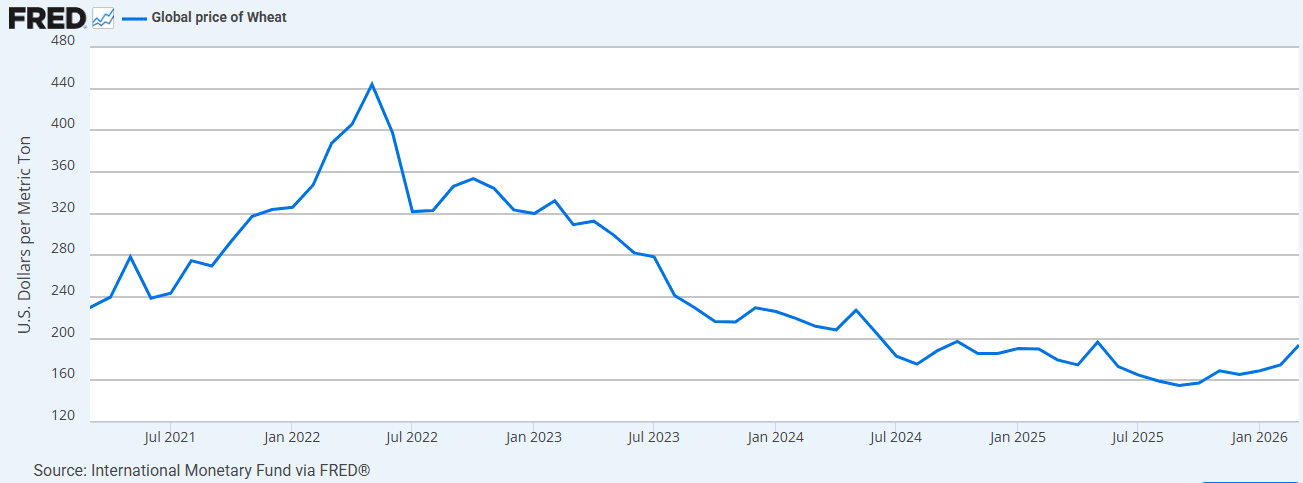
Russia's invasion of Ukraine in February 2022 sent an immediate shockwave through global food markets. Before the war, Russia and Ukraine together supplied around a third of global wheat and barley exports, a fifth of corn, and more than 70% of sunflower oil. [1] These were not niche commodities; they were the dietary foundation for billions of people.
In March 2022, the FAO Food Price Index hit its highest level since its inception in 1990, with wheat prices 58% higher and grain prices 34% higher than a year earlier. [2] In some import-dependent countries, wheat prices rose by as much as 750%. [1] When Russia pulled out of the Black Sea Grain Initiative in July 2023, prices rose again. The war created a persistent repricing of food worldwide, much of which still endures today.
This year, war in the Middle East and the closure of the Strait of Hormuz have triggered a fertiliser supply shock that threatens to suppress harvests well beyond the immediate disruption. [3] Countries that depend heavily on Gulf-sourced fertiliser are exposed, particularly in sub-Saharan Africa and South Asia, where any reduction in fertiliser use translates directly into lower yields and higher food prices. [4]
Trade policy is another compounding force. When prices spike, governments have responded with export restrictions to protect domestic supply, further tightening global markets. India's July 2023 ban on non-basmati white rice exports pushed Thai and Vietnamese export quotes to the highest levels since 2008. [5] In April 2025, the United States imposed sweeping tariffs on imports from around the world. Items like coffee, fish, and fruit saw price increases. [6] The administration's November 2025 exemption of over $50 billion of food and agricultural imports from the tariffs was an implicit acknowledgement of the pressure on US grocery prices. [7]
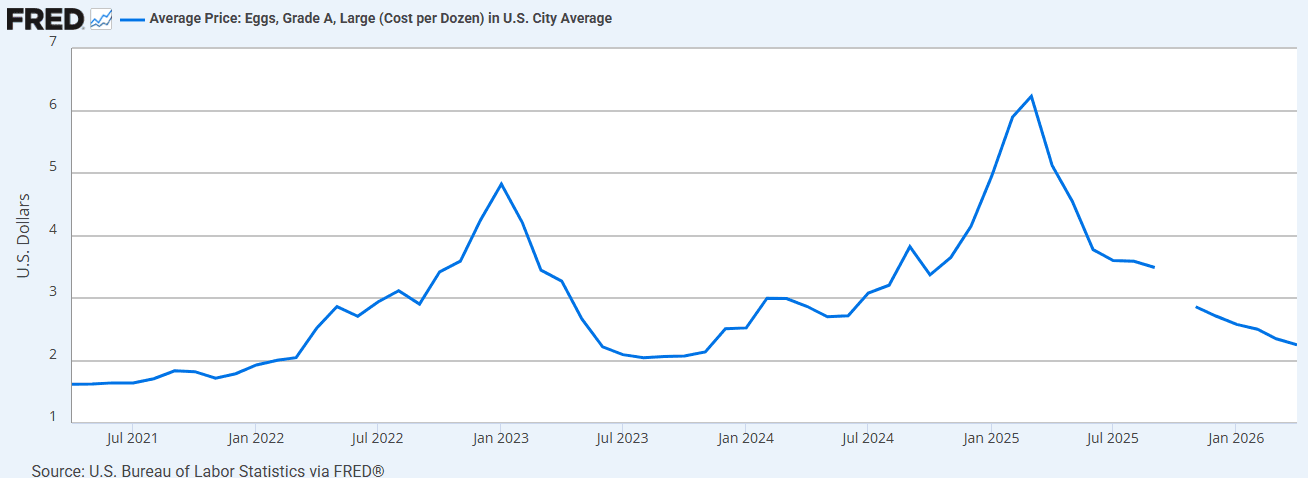
The H5N1 bird flu outbreak, which began sweeping commercial poultry flocks in 2022, has demonstrated how severely a single disease outbreak can disrupt food markets. The virus is highly contagious, and once a bird is infected, entire flocks are culled. Over 150 million chickens have been culled in the United States alone since the outbreak began. [8] The consequences for egg prices were dramatic: the average price of a dozen eggs rose 65% in 2024, and by early 2025 prices in some US cities reached $9 a dozen, their highest level in 45 years. [9] Prices have since fallen from these peaks, but they remain well above pre-outbreak norms. Even when a shock passes, the price floor it leaves behind can stay elevated for years.
The pattern is not new. African Swine Fever swept through China beginning in 2018, killing or forcing the culling of an estimated 40% of the country's hog herd, which at the time accounted for around half of global pork production. [10] Chinese pork prices more than doubled, and the resulting surge in import demand pulled record exports from the EU, US, Canada, and Brazil, reshaping global pork trade flows for years. [10] Each major animal disease outbreak follows a similar arc: rapid spread, culling, supply shock, and heightened prices that last long after the outbreak itself.
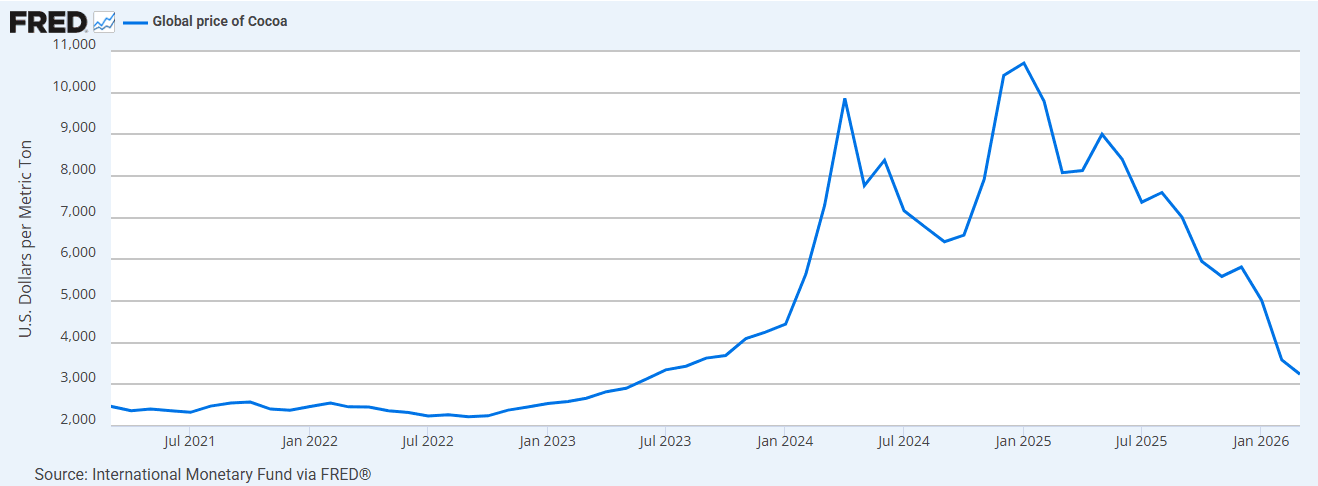
The threat is not limited to animal disease. Plant pathogens are a parallel and growing source of price shocks. Cocoa swollen shoot virus and black pod disease, both significant pathogens of cocoa trees, were major contributors to the global cocoa price spike in 2024. [11] Citrus greening has crippled Florida's citrus production, Xylella fastidiosa has destroyed millions of olive trees across southern Europe, and coffee leaf rust has periodically devastated harvests across Latin America. Biological threats are a growing category of risk that spans both animal and plant production systems.
Climate-driven price shocks are now a regular feature of food markets, not a tail risk. A study of 16 climate-driven price spike events across 18 countries from 2022 to 2024 found that many of the extreme weather events were so severe they exceeded all historical precedent prior to 2020. [12]
The data is striking. Global cocoa prices were nearly 300% higher in April 2024 following extreme weather in Côte d'Ivoire and Ghana, which together account for around 60% of global production. The cocoa crisis was a compound shock: excessive rainfall in 2023 and a harsh dry spell in early 2024 reduced yields directly and enabled the spread of cocoa swollen shoot virus and black pod disease. [11, 12] Coffee prices hit an all-time high in early 2025 following droughts in Brazil and Vietnam, representing a 103% increase over the prior year. [13] In the UK, potato prices rose 22% in a single month following winter rainfall that scientists said was made ten times more likely by climate change. [12] In California and Arizona, vegetable prices jumped 80% in November 2022 after severe summer drought. [12]
The global food system is increasingly vulnerable in our increasingly extreme climate. Projections suggest climate change could add up to 3 percentage points to annual food inflation globally by 2035. [12]
Food technology can meaningfully reduce the risk and volatility that are increasingly impacting our food system by decoupling food production from specific concentrated chokepoints.
Alternative production methods reduce geographic and supply chain constraints. Cell culture and precision fermentation produce food through systems that do not depend on the same geographic concentrations, climates, and supply chains as traditional agriculture. A plant-based nugget does not rely on chickens that can be infected by avian influenza. Cell-cultured cocoa does not require cocoa trees in Ghana. Savor, a Synthesis portfolio company, produces fats through chemical synthesis, decoupled from agriculture entirely. Each of these examples removes a category of ingredient from its vulnerable, concentrated production base. By scaling innovations like these, we can augment the food supply, shore up supply chains, and diversify risk. Many food tech facilities can also be built, in principle, anywhere with electricity, water, and feedstock supply, fundamentally different from the geography-bound and soil-bound systems they replace.
Food technologies can reduce demand for agricultural inputs and feed crops. Alternative proteins require dramatically less feed per unit of protein than the animals they replace. As they displace conventional animal products, the result is a system-wide reduction in demand for feed crops like soy and corn, alongside a reduction in the risk of zoonotic disease shocks tied to industrial animal production.
Several agtech companies are developing products that reduce or replace synthetic fertiliser directly. For instance, Azotic Technologies has developed nitrogen fixing biologicals. The Hormuz closure has illustrated how concentrated and chokepoint-exposed nitrogen fertiliser is. These technologies can reduce global synthetic nitrogen demand and therefore exposure to the natural-gas-dependent, geographically concentrated supply that today's farmers rely on.
Controlled environment agriculture reduces exposure to climate volatility. Modern greenhouses can produce crops in locations and climates where open-field farming is increasingly risky. These greenhouses are much less exposed to the droughts, floods, and heatwaves that drive climate-related price spikes. Companies like Hippo Harvest are developing proprietary AI and robotics to make greenhouse growing price-competitive with open-field production.
Lower-emissions products help slow the underlying climate and extreme weather driver. Many of the technologies discussed above also have substantially lower greenhouse gas footprints than the conventional products they displace. The extreme weather events increasingly disrupting food production are themselves driven by climate change, which is in part driven by food system emissions. Every shift toward lower-emissions food production contributes, however incrementally, to dampening future climate-induced price shocks.
The food system is being tested by converging pressures that show no sign of abating. Diseases will continue to sweep through animal feed lots and crops. Geopolitical tensions will continue to threaten the chokepoints on which global food trade depends. Climate change will continue to disrupt harvests.
The question is whether we begin to build a food system that is more resilient. Food technology is not a silver bullet, but it is a powerful tool that can be used to decentralise production, diversify ingredient sources, and reduce dependence on geographically concentrated inputs. This can in turn reduce supply shocks and minimise price volatility. At Synthesis Capital, we invest with exactly this in mind. We back companies building production systems that are structurally less exposed to the forces repricing food.
[1] Al Jazeera (2022). How did the Russia-Ukraine war trigger a global food crisis? https://www.aljazeera.com/economy/2022/6/18/explainer-how-did-russia-ukraine-war-trigger-a-food-crisis
[2] UN News (2022). Ukraine war drives international food prices to 'new all-time high'. https://news.un.org/en/story/2022/04/1115852
[3] UN News (2026). Dire fertiliser shortage a lurking threat due to Hormuz crisis. https://news.un.org/en/story/2026/03/1167182
[4] IFPRI (2026). The Iran war's impacts on global fertilizer markets and food production. https://www.ifpri.org/blog/the-iran-wars-impacts-on-global-fertilizer-markets-and-food-production/
[5] USDA Foreign Agricultural Service (2024). Rice Export Prices Highest in More Than a Decade as India Restricts Trade. https://www.fas.usda.gov/data/rice-export-prices-highest-more-decade-india-restricts-trade
[6] AEI (2026). Evaluating the Impact of Tariffs on US Agriculture a Year After Liberation Day. https://www.aei.org/research-products/report/evaluating-the-impact-of-tariffs-on-us-agriculture-a-year-after-liberation-day/
[7] Tax Foundation (2026). Trump Tariffs Will Raise the Cost of Food for Americans. https://taxfoundation.org/blog/trump-tariffs-food-prices/
[8] USDA (2025). USDA Invests Up To $1 Billion to Combat Avian Flu and Reduce Egg Prices. https://www.usda.gov/about-usda/news/press-releases/2025/02/26/usda-invests-1-billion-combat-avian-flu-and-reduce-egg-prices
[9] Think Global Health (2025). Bird Flu Roars Back. https://www.thinkglobalhealth.org/article/bird-flu-roars-back-what-it-means-for-thanksgiving
[10] Gale, F., Kee, J., & Huang, J. (2023). How China's African Swine Fever Outbreaks Affected Global Pork Markets (Report No. ERR-326). USDA Economic Research Service. https://www.ers.usda.gov/publications/pub-details?pubid=107924
[11] UNCTAD (2024). Chocolate price hikes: A bittersweet reason to care about climate change. https://unctad.org/news/chocolate-price-hikes-bittersweet-reason-care-about-climate-change
[12] Kotz, M. et al. (2025). Climate extremes, food price spikes, and their wider societal risks. Barcelona Supercomputing Center. https://www.bsc.es/news/bsc-news/countries-across-the-world-see-food-price-shocks-climate-extremes-research-involving-bsc-shows
[14] Center for American Progress (2025). How Fossil Fuels and Global Extreme Weather Increase Americans' Food Prices. https://www.americanprogress.org/article/how-fossil-fuels-and-global-extreme-weather-increase-americans-food-prices/
[15] Green Central Banking (2025). Extreme weather to prompt more food price spikes in 2025. https://greencentralbanking.com/2025/02/19/extreme-weather-food-prices-2025/
This website uses strictly necessary cookies to enable the website to function, namely to secure our website and to save certain preferences and repeat visits, including recording your cookies preferences.
If you agree, we would also like to use non-essential cookies to enable us to observe traffic levels to the website which allows us to understand interaction with the website and helps us to improve the website and our services.
To learn more about this, visit our Cookie Policy. You may consent or decline to the use of non-essential cookies by clicking “Accept Cookies” or “Decline Cookies” below.