In Conversation with Our New Advisor: Sharon Walbert
Feature
When considering who to welcome as a formal advisor, we look for experts who can move fluently between the technical detail and real-world implementation; a combination which is often tricky to find.
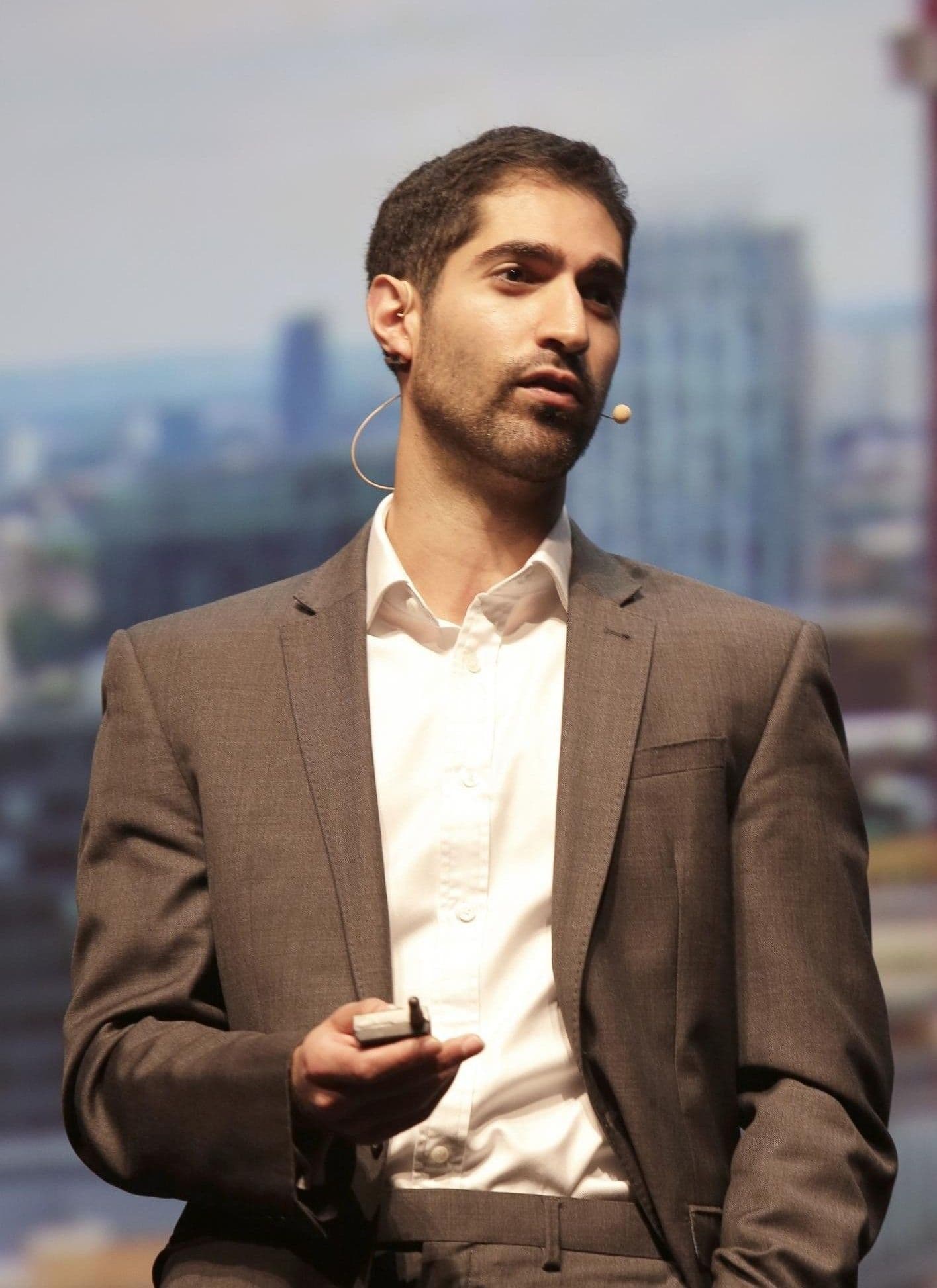
This year, we were fortunate to welcome Zubin Siganporia, a mathematician and data scientist with a background in advanced analytics, machine learning, and optimisation, and works to apply this expertise to industrial problems.
We sat down with Zubin to explore some of the big questions facing our sector today.
For a fuller introduction to Zubin, click here to view his profile page.
Rosie: Besides LLMs, which are getting a lot of attention at the moment, which intersections of biology and mathematics are you most excited about?
Zubin: Beyond LLMs, I'm particularly excited by areas where mathematical thinking directly shapes experimental and operational decisions in biology. The design of experiments is a well-established area of mathematics, and is becoming increasingly powerful in biological settings, where the space of possible interventions is large and experiments are often costly. It provides a structured way to explore systems with many inputs, enabling us to extract maximal insight from minimal lab work.
More broadly, even relatively simple models, when carefully constructed, can yield actionable insight into complex biological processes and help answer specific, practical questions across the biomanufacturing pipeline. The combination of mechanistic modelling with data-driven methods, including machine learning, is enabling a shift towards more predictive and quantitative biology. This allows for better anticipation of system behaviour and supports more informed decision-making.
Biological data is often highly sensitive, and since mathematics underpins modern encryption, secure data analysis is another important intersection of the two fields.
Overall, I'm most excited about mathematicians and biologists genuinely working together in a way that leads to meaningful progress on important real-world problems.
What advances in mathematics that have been successfully introduced in other data-rich industries (e.g. defence, motorsport, banking) could be applied in biomanufacturing to improve efficiency?
Zubin: Techniques using mathematical modelling and data science have proved extremely valuable in many other industries, and the underlying methods will often be directly applicable and transferable to biomanufacturing. Optimisation is a broad area within mathematics, and can address both discrete and continuous problems. It offers a powerful framework in biomanufacturing for improving key operational drivers such as resource allocation, scheduling, and process design.
Bayesian inference provides a principled way to update beliefs and make decisions under uncertainty, which is especially relevant in noisy biological systems. Meanwhile, more recent developments in machine learning, and particularly reinforcement learning, have the potential to automate and adapt complex process control in real time. As a final example, the study of cryptography forms the basis of data security. Although this remains relatively underexplored in biomanufacturing, it may become increasingly relevant, particularly as collaboration and data sharing become more important to the industry.
Rosie: What made you want to work with Synthesis, and what has your experience of working with the team been like so far?
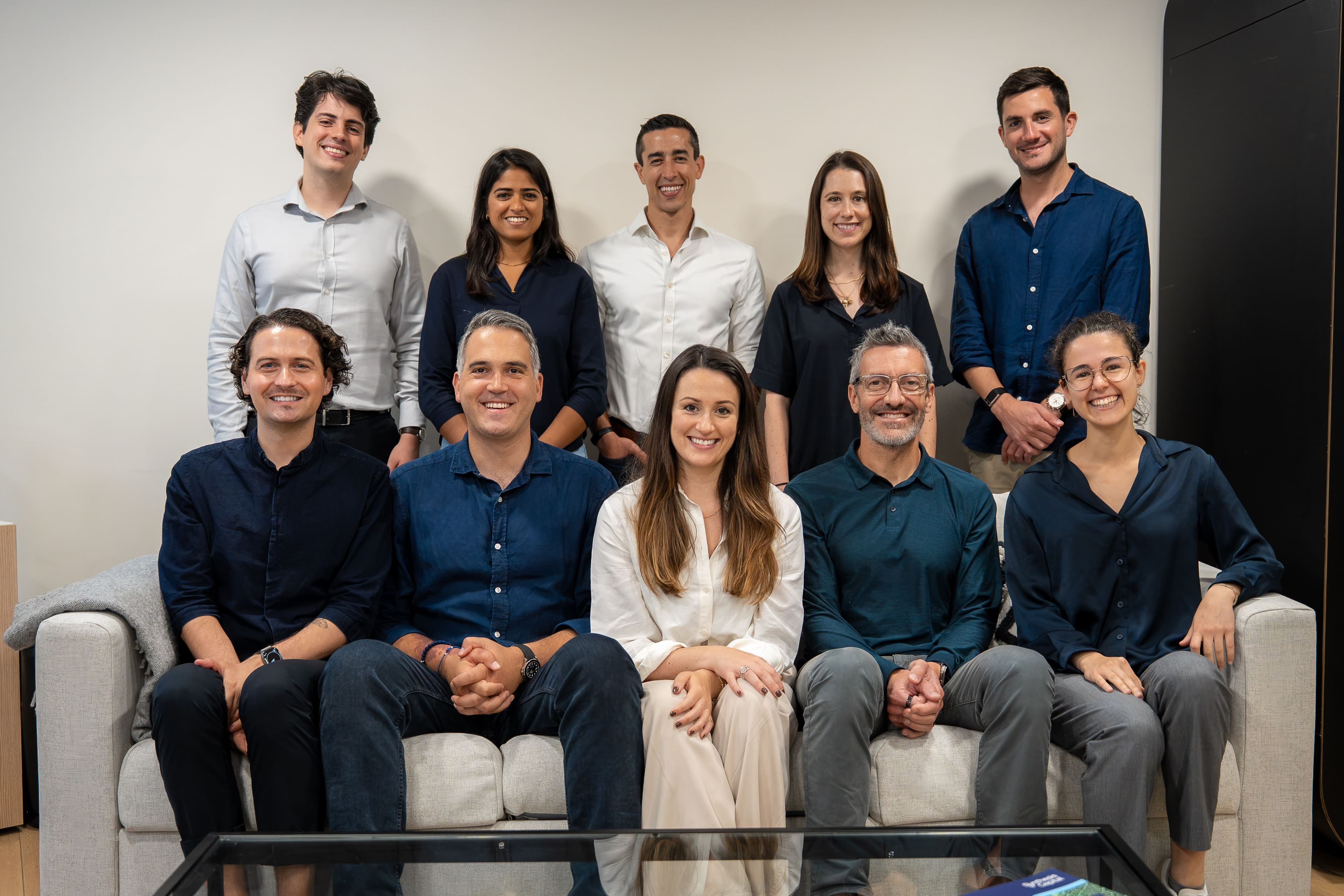
Zubin: I had several initial conversations with David Welch at Synthesis, and really enjoyed speaking to him. As I met more members of the team, it became clear to me that they were all really friendly, thoughtful people who also had a huge amount of knowledge in their field. I was invited to the most recent LP meeting in London, and had a great time. Honestly, I think Synthesis team are brilliant, and feel lucky to be working alongside such a great group of people.
This website uses strictly necessary cookies to enable the website to function, namely to secure our website and to save certain preferences and repeat visits, including recording your cookies preferences.
If you agree, we would also like to use non-essential cookies to enable us to observe traffic levels to the website which allows us to understand interaction with the website and helps us to improve the website and our services.
To learn more about this, visit our Cookie Policy. You may consent or decline to the use of non-essential cookies by clicking “Accept Cookies” or “Decline Cookies” below.